

Let’s start with the thing that trips up everyone who moves here: the name.
It’s STAN-tun, not STAWN-ton.
Get that right on day one and you’ll earn a small, silent nod of approval from whoever hears you say it.
Now that we’ve handled the most important lesson, here’s everything else you need to know.
What Kind of Place Is This, Exactly?
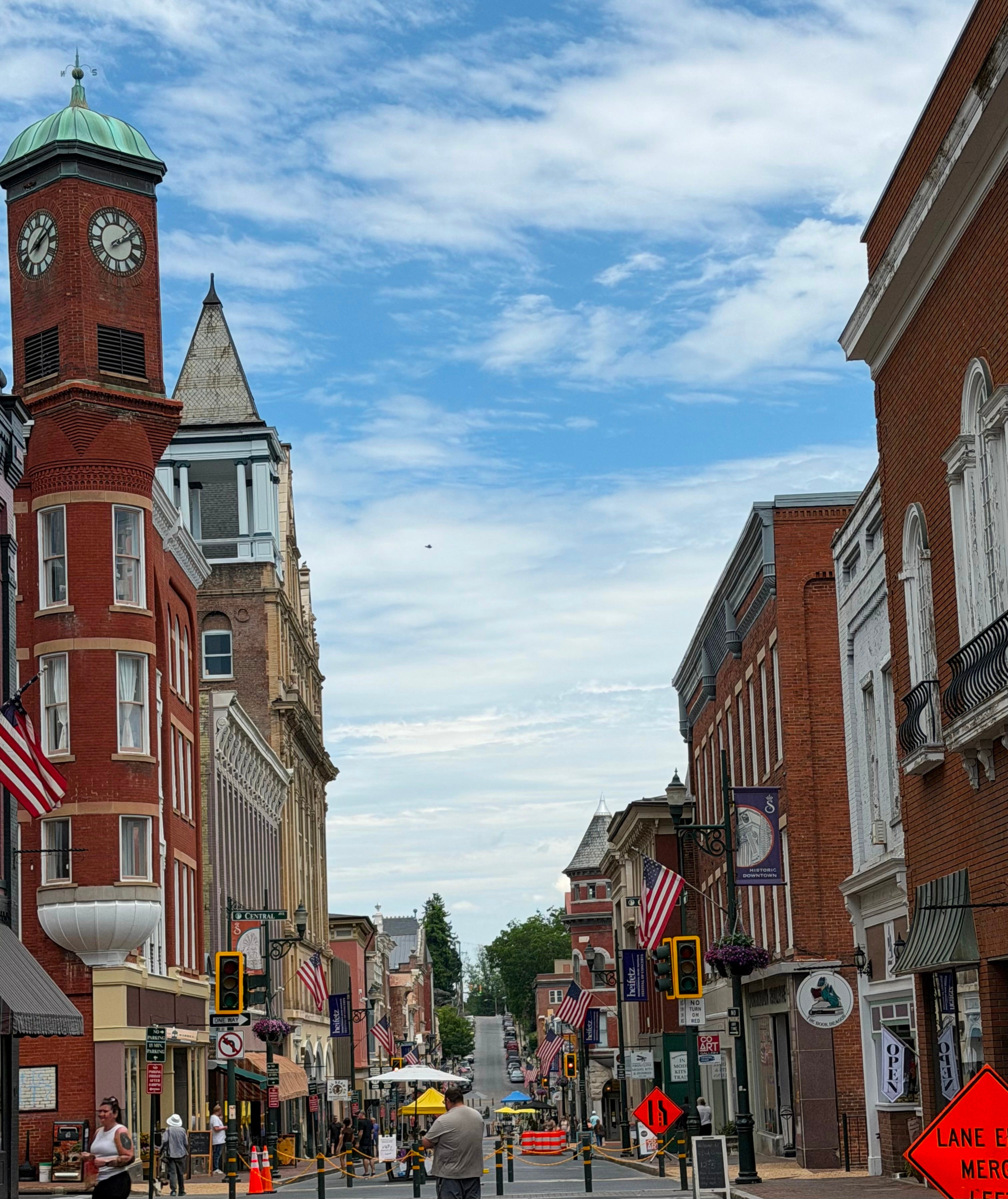
Staunton sits in the Shenandoah Valley at the crossroads of I-81 and I-64, wrapped by the Blue Ridge Mountains to the east and the Allegheny range to the west. The city covers about 20 square miles and holds a population of roughly 25,800 people. By any objective measure, that’s small. What Staunton punches above its weight class on is the quality of what it offers those people.
Six of its historic districts sit individually on the National Register of Historic Places. More than 35 architectural styles crowd its walkable downtown. The American Shakespeare Center’s Blackfriars Playhouse is the only working re-creation of Shakespeare’s original indoor theater in the world. A James Beard-nominated chef whose restaurant landed on the New York Times’ 50 Best Restaurants list in 2025 calls this city home. Smithsonian Magazine named it one of the best small towns in America. It’s a lot for a city that barely clears 26,000 residents.
People who grow up here often leave, discover that no other mid-size city feels quite like this, and come back. People who move here from elsewhere frequently spend the first few months slightly confused about why no one told them about this place sooner.
The Lay of the Land
Downtown Staunton is compact and walkable. Beverley Street is the main commercial artery, running east-west through the heart of the historic district. Restaurants, independent shops, galleries, and the theater all cluster within a few blocks of each other. From April through October, a stretch of Beverley Street closes to cars on weekends. The Shop & Dine Out street closure turns the block between Lewis and Market streets into a pedestrian zone that fills up fast on warm evenings.
The city breaks into distinct neighborhoods, each with its own personality.
Gospel Hill and Newtown are the historic districts that most people fall in love with on a first visit. The architecture here dates to the 1800s. Victorian-era homes sit on quiet, tree-lined streets within walking distance of downtown. If you want a house with genuine bones and genuine character, this is where you look.
The Wharf District, wedged below Beverley Street, occupies a compact stretch along the railroad tracks. The Amtrak station anchors the eastern end. It carries the kind of gritty-to-polished energy that signals a neighborhood in transition.
Stuart Addition and Beverley offer a mix of historic homes and proximity to downtown amenities, popular with young professionals and families who want to walk to dinner.
For people who want more space and newer construction, neighborhoods at the city’s edges and the broader Augusta County surrounding Staunton provide that, often at lower price points.
What Does It Cost to Live Here?
The honest answer is: less than you’re probably used to, with a few asterisks.
According to RentCafe’s 2026 data, the overall cost of living in Staunton runs about 5% below the national average and 13% below the Virginia state average. Housing is the biggest driver; home prices here run roughly 19% below the national median, and the median home price sits around $405,000. Groceries come in about 1% cheaper than the national average. Healthcare runs 5% lower.
The asterisks: utilities and transportation. Utility costs run about 9% higher than the national average. The city is not transit-dependent. A car is essentially required for most residents, and that shapes your monthly budget accordingly.
For renters, expect to pay a median of around $1,400 to $1,460 per month for an apartment, which runs slightly above the national rental average. The rental inventory here is tighter than the ownership market, and demand from Mary Baldwin University students, hospital workers, and remote workers relocating from Northern Virginia keeps that pressure steady.
The median household income in Staunton is approximately $65,581. If you’re arriving with a remote salary benchmarked to a major metro, your dollars will stretch noticeably further here.
Food and Drink
Staunton’s food culture is not what you’d expect from a city this size, and locals are aware of that. The bar is high.
Maude & the Bear at 1106 N. Augusta Street is the city’s most talked-about table. Chef Ian Boden’s culinary inn and restaurant occupies a renovated 1926 Montgomery Ward kit house and offers a multi-course tasting menu drawing from his Jewish Ashkenazi roots and the Appalachian landscape around him. A James Beard semifinalist nomination for Best New Restaurant followed in 2025, as did a spot on the New York Times’ 50 Best Restaurants list. The restaurant serves dinner Thursday through Saturday, with Sunday brunch for inn guests. Reservations require planning well in advance.
The Shack at 105 S. Coalter Street operates in a different register. The 26-seat room that Boden founded in 2014 is now run by Chef Michael Skipper, and the kitchen has shifted toward handmade pastas, wood-fired pizza, and sharable plates. It’s casual, open Thursday through Sunday, and committed to the hyperlocal sourcing that made the room famous. Check their Facebook page for the weekly menu.
Zynodoa on Beverley Street puts farm-to-table Southern cooking on the table steps from the theater. Seed to Tail runs a sandwich shop, bakery, and specialty market with a monthly wine dinner series. Cranberry’s Grocery & Eatery serves the natural foods crowd with made-to-order food and locally sourced pantry goods. Reunion Bakery & Espresso is where a significant portion of downtown Staunton begins its mornings.
For groceries, you’ll find a Kroger on Statler Boulevard, a Martin’s Food Market, Food Lion locations, an ALDI, and a Walmart Supercenter. The Staunton Farmers’ Market runs Saturdays from 7 a.m. to noon, April through the Saturday before Thanksgiving, at its 2026 location at the J&DR Courthouse parking lot at 2020 W. Beverley Street. It draws local farmers, food vendors, and artisans, and making it a weekly ritual pays off.
The beverage scene is well-developed. Yelping Dog Wine on Beverley Street carries a curated selection of natural and small-producer wines. Ox-Eye Vineyards operates a tasting room right downtown. Local breweries round out the picture for beer drinkers.
Culture, Arts, and Things to Actually Do
The cultural calendar here would embarrass cities three times Staunton’s size.
The American Shakespeare Center at Blackfriars Playhouse is the marquee institution. Productions run year-round in the candlelit recreation of Shakespeare’s original indoor theater, performed with original staging practices. It’s a genuinely unusual and transporting experience. The Summer 2026 season features rotating repertory productions of As You Like It and Our Town, running May 28 through August 9.
The Staunton Music Festival, held each August, brings more than 90 classical musicians from around the world to perform 30 concerts over 10 consecutive days in the city’s historic venues. Visit Staunton notes that Travel + Leisure has recognized it as Virginia’s world-class music festival. The 2026 Summer Festival runs August 14 through 23.
The Frontier Culture Museum sits just west of the city and operates as an open-air living history museum tracing the agricultural and cultural roots of the Shenandoah Valley. Summer camps for kids run through the season.
The Woodrow Wilson Presidential Library and Museum occupies Wilson’s actual birthplace on Coalter Street. The museum includes an immersive World War I trench exhibit and his restored 1919 Pierce-Arrow limousine.
Sunspots Studios on N. Augusta Street offers public glassblowing demonstrations and sells work by local artisans. The R.R. Smith Center for History & Art hosts rotating exhibitions and community programming. The Co-Art Gallery on Beverley Street shows regional artists year-round.
The Arcadia Project is currently renovating the historic theater at 125 E. Beverley Street. When it opens, it will add a meaningful new performance venue to the city’s arts infrastructure.
Getting Outside
Gypsy Hill Park is the city’s 214-acre centerpiece, located at the intersection of Churchville Avenue and Thornrose Avenue. The 1.3-mile loop road, Constitution Drive, accommodates walkers, joggers, and cyclists. Sports fields, tennis courts, a duck pond, a rose garden, a public pool, a golf course, and covered pavilions all share the grounds. The park opens at 4 a.m. and closes at 11 p.m. Most days, you’ll find a full cross-section of Staunton life in motion there.
Betsy Bell and Mary Gray Wilderness Park offers something Gypsy Hill doesn’t: genuine solitude. The two small mountains inside city limits carry hiking and mountain biking trails, and the wooden overlooks at Betsy Bell’s summit give you one of the best views of Staunton and the valley beyond. The 1-mile trail gains about 275 feet and earns its moderate rating on a steep final push.
Montgomery Hall Park connects to Betsy Bell via the Yulee Trail system, giving the ambitious hiker or mountain biker a combined route of 6.5 miles with 593 feet of elevation gain — a solid workout without ever leaving the city.
Shenandoah National Park and the Blue Ridge Parkway sit within easy striking distance. Sherando Lake Recreation Area in Augusta County offers swimming, camping, and quiet trails. The Fields of Gold Farm Trail connects you to working farms, vineyards, and orchards across the valley.
Getting Around
Own a car. That’s the real truth. Staunton’s downtown is walkable, but the broader region is not.
That said, car-free options exist. BRITE Bus connects Staunton to Waynesboro, Stuarts Draft, and the broader valley. The Downtown Trolley loops through the historic core and Gypsy Hill Park. The Virginia Breeze intercity bus stops at 210 Crossing Way and runs daily to Washington, D.C.’s Union Station and to Virginia Beach. The Amtrak station at 1 Middlebrook Avenue serves the Cardinal and Crescent lines. The Shenandoah Valley Regional Airport sits about 15 miles north in Weyers Cave, with American Airlines/SkyWest service to Chicago O’Hare and Charlotte.
Biking in the downtown core is practical. The city striped bike lanes on Churchville Avenue in 2025, connecting downtown to Gypsy Hill Park.
Schools and Healthcare
Staunton City Schools serve the city and rank above the state average by most measures. The system is small enough that students aren’t anonymous and teachers know their kids by name, which is a tradeoff many families find worth making.
Mary Baldwin University at 318 Prospect Street brings the programming of a small liberal arts institution to the city, including public lectures, performances, and athletic events open to the community.
For healthcare, Augusta Health is the city’s primary system; a community-owned, not-for-profit hospital and clinic network headquartered about five miles east in Fishersville at 78 Medical Center Drive. Their Staunton Urgent Care on Statler Boulevard handles walk-in needs daily from 8 a.m. to 7 p.m. For mental health and substance use services, the Valley Community Services Board at 85 Sangers Lane operates a 24-hour crisis line at 540.885.0866.
Getting Plugged In
Staunton has a real sense of community, but it rewards showing up. Here’s where to start.
The Staunton Farmers’ Market on Saturday mornings is the most reliable weekly gathering of a broad cross-section of the city. Go twice, talk to the same vendors, and you’ll already know people.
The Staunton-Augusta Family YMCA at 708 N. Coalter Street runs fitness programs, youth sports leagues, afterschool care, and summer camps. Financial assistance is available to anyone who needs it.
The Staunton Public Library at 1 Churchville Avenue holds regular events, community programs, and a Memory Cafe series, and stays open until 9 p.m. Monday through Thursday.
The Community Foundation of the Central Blue Ridge at 117 S. Lewis Street connects residents who want to give back with grant programs and local nonprofits.
Subscribe to The Stauntonian. A city this full of things to pay attention to deserves a weekly read.
A Few Other Notable Things
The Beverley Street pedestrian closures run Friday evenings through Monday mornings, April through October. Plan your parking accordingly if you’re driving downtown on weekends.
Staunton gets four genuine seasons. The winters are cold and occasionally snowy. The summers are warm but not brutal; cooler than Charlottesville or Richmond because of the elevation. The falls are exceptional.
Downtown parking is free in the city’s garages and street spots up to a time limit. Do not assume Northern Virginia rules apply.
The Shenandoah Valley runs on a fairly early schedule. Restaurants that stay open past 9 p.m. are the exception. Adjust your dinner reservation timeline accordingly.
As for the pace: Staunton is not slow, but it is not frantic. If you’ve come from a city where standing still feels like falling behind, this takes some unlearning. Most people find it worth the adjustment.
For local news, community coverage, and the weekly pulse of Staunton life, subscribe to The Stauntonian at stauntonian.com. Issues publish every Thursday.