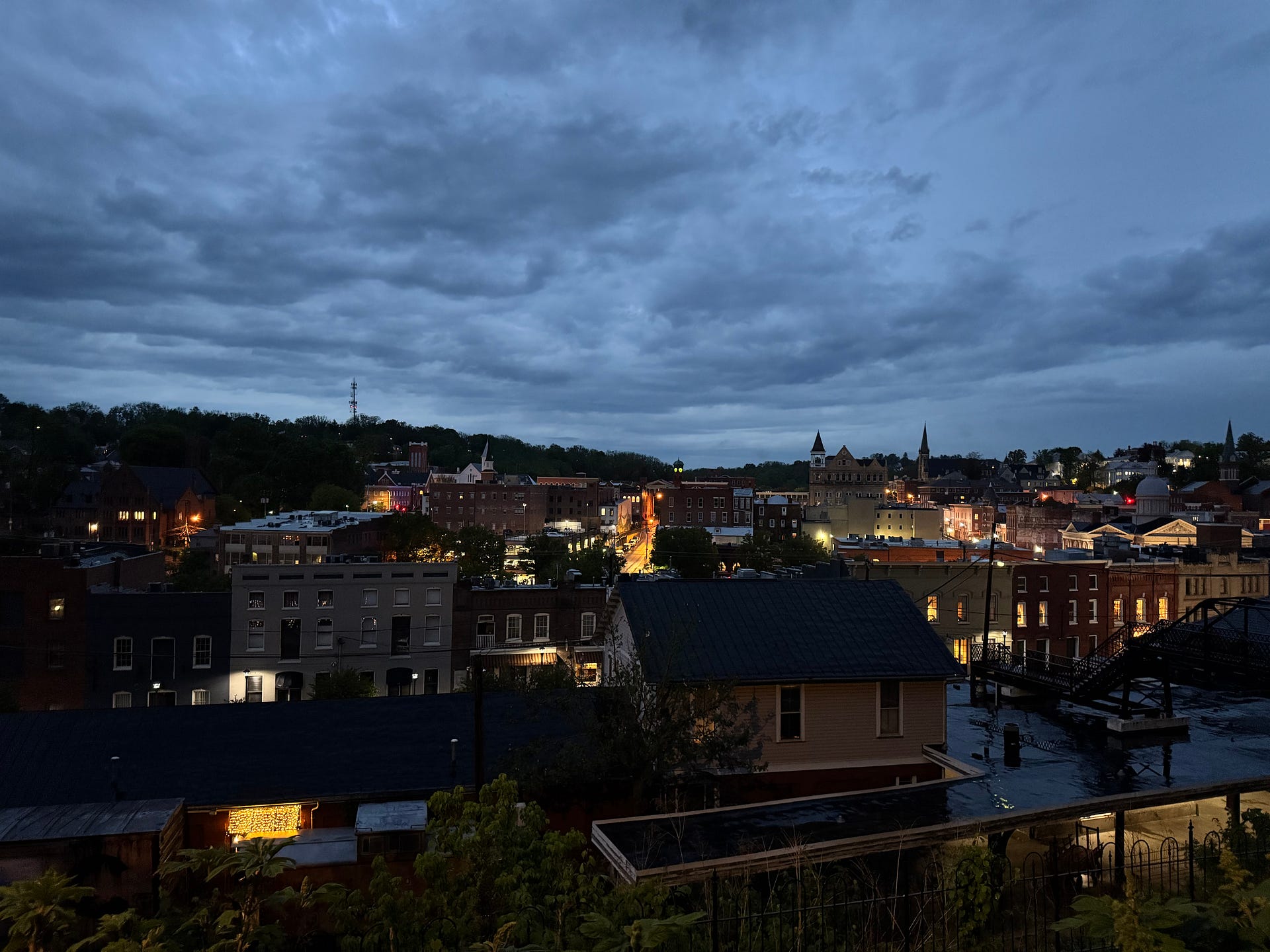



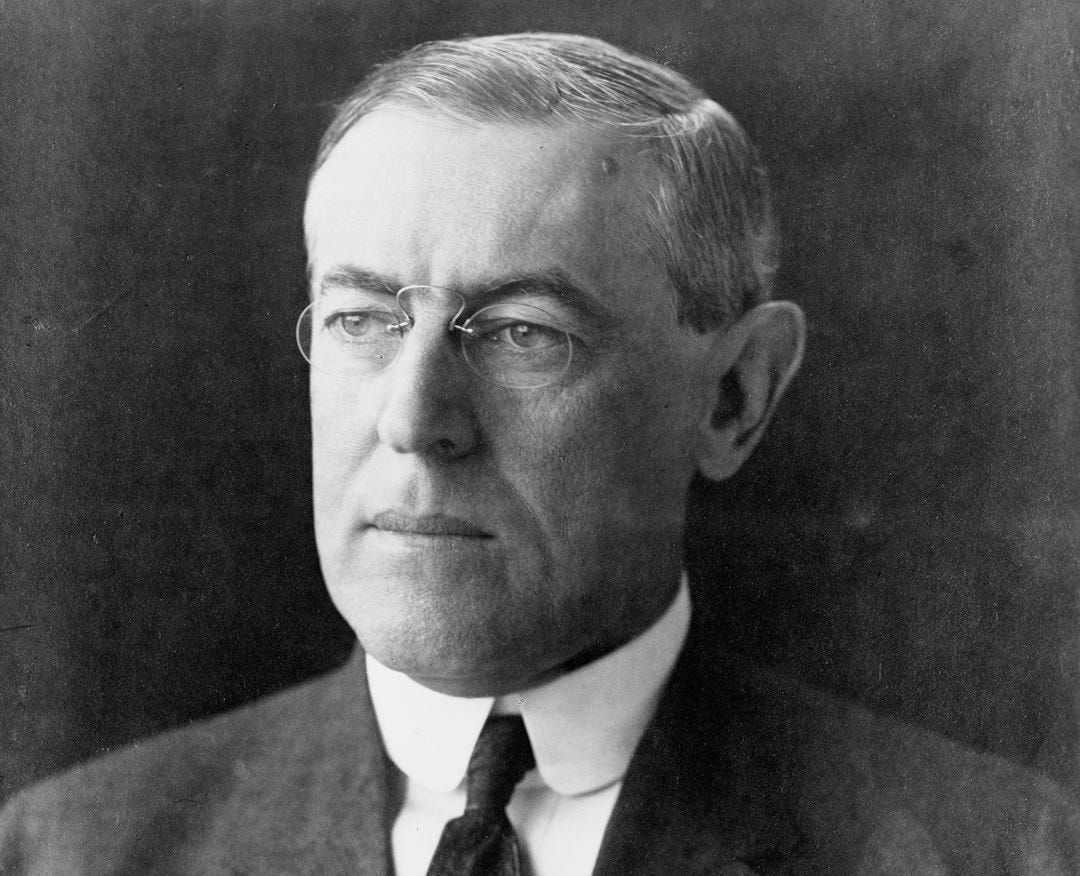
Staunton tells the Woodrow Wilson story mostly in the museum tense: the manse, the artifacts, the Pierce-Arrow limousine. What the museum version compresses is the strangest, most electric day in the relationship between this town and its most famous son, when Staunton threw the biggest party in its history for a man who had lived here roughly one year of his life.
The Town That Campaigned Early
Start with an overlooked fact: Staunton wanted Wilson to be president before most of the country had considered the idea. In 1910, as Wilson left Princeton’s presidency to run for governor of New Jersey, a grassroots “Wilson for President” movement was already under way back in Staunton. The town had organized its own Woodrow Wilson Club. In November 1911, during an unannounced stop in Charlottesville, Governor Wilson accepted the club’s invitation to revisit his city of birth and speak to political supporters, a full eight months before he won the Democratic nomination.
His actual ties to the place were thin and mostly secondhand. The family left Staunton shortly before his first birthday for Georgia. But he kept coming back: an aunt’s family lived here, his sisters and cousins attended Augusta Female Seminary, and his mother was a close friend of the school’s principal, Mary Julia Baldwin. As a law student at the University of Virginia around 1880, he nursed a romantic interest at the seminary, an unrequited courtship that put him on the train through the Blue Ridge more than once. Staunton was not really his hometown. It was the town that decided to be his hometown, and lobbied for the job.
December 28, 1912
Days after Wilson won the White House in the three-way race of 1912, representatives of Staunton’s Woodrow Wilson Club traveled to his home in Princeton, New Jersey, carrying a personal invitation: come back to Staunton and celebrate your 56th birthday in the house where you were born. He said yes, and the whole rail corridor started planning. When his train reached Charlottesville on the evening of December 27, officials cut the electric lights near the station except for a sign reading “Welcome Wilson,” red torches went up, a band played, and Wilson stepped onto the rear platform and shook hundreds of hands. In Crozet, the local Democratic precinct lit a bonfire beside the tracks as the train passed. That night, the president-elect slept in the same bedroom in which he had been born 56 years earlier.
The next day, the town more than doubled. Excursion trains poured in, a round trip from central Virginia cost $1.20, and the crowd was reported at 25,000, in a city whose population was a fraction of that. The town decorated itself end to end, and a central committee published an official program of events. Wilson spoke at Mary Baldwin Seminary, where his father had once served as chaplain, and the day closed with a birthday banquet at the Staunton Military Academy. Photographs from that afternoon show him waving to the crowd from the porch of the manse itself.
Virginia’s Democratic establishment had not been early to the Wilson cause. By the account of the Wilson birthplace organization itself, the state came around to its native son in the eleventh hour. The 25,000 people in the streets were ahead of their own party leadership, and Staunton’s Wilson Club had been ahead of nearly everyone.
What the Day Looked Like From Here
The homecoming set the template for everything after. The town that adopted Wilson kept him: two thousand Virginia militia members marched in his 1913 inaugural parade, and dignitaries en route to Washington detoured to see the birthplace. Nearly a half century later, President Eisenhower stood on the porch of Mary Baldwin’s Administration Building to mark the anniversary of that 1912 homecoming, with two sitting senators and the mayor beside him.
History has since complicated Wilson considerably, and honest accounts of his record now sit alongside the hagiography, including at the museum itself, whose curators note that Wilson was the last president born in a household where enslaved people lived and worked. The man is harder to celebrate uncritically than he was in 1912, and that reckoning is its own ongoing story. But the day itself remains a fact about Staunton more than a fact about Wilson: a small Valley city that picked its candidate two years early, sent a delegation to Princeton with an invitation, and turned itself into the center of the political universe for 24 hours. He gave the town one year of his life. The town gave him a hometown anyway.
Local history is a new section of The Stauntonian. If there is a story, a building, a person, or an era you want us to look into, write to Brad at brad@stauntonian.com.